Waiting to Render: How Processing Backlogs Are Quietly Strangling Creative Momentum
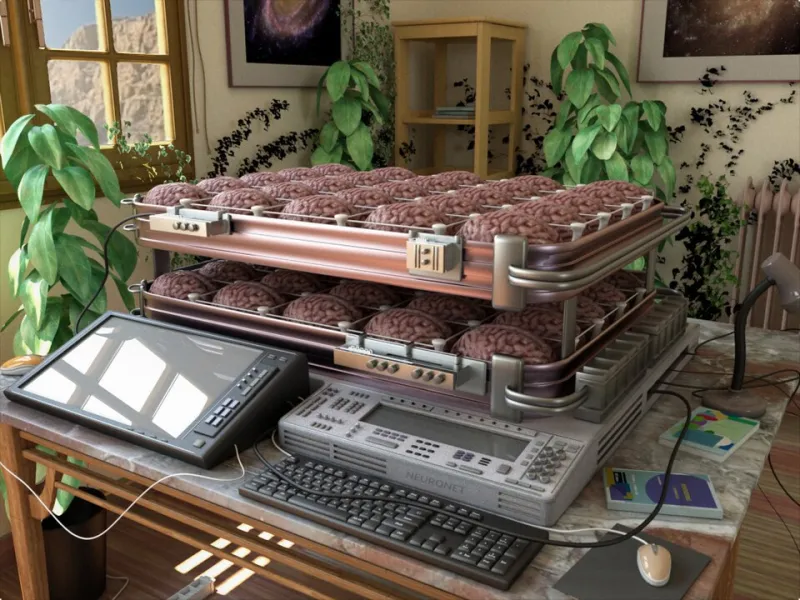
Photo: masbt, CC0, via Wikimedia Commons
There's a moment most production designers and VFX artists know intimately. You've cracked something. The lighting angle is right, the texture pass finally feels lived-in, the whole composition clicks. You submit the frame. And then you wait.
Sometimes you wait hours. Sometimes you wait days. And by the time the output lands back in your queue, that electric certainty you had about the idea has cooled. You're looking at the result with different eyes—not better eyes, just different ones. The momentum is gone.
That's the render farm bottleneck in its most human form, and it's quietly becoming one of the biggest creative constraints in modern media production. Not because the technology is broken, but because the gap between ideation speed and computation speed has never been wider.
The Invisible Tax on Iteration
Creative work lives and dies on iteration. The first version of anything is almost never the right version. You push something out, you react to it, you adjust, and you push again. That cycle—fast, instinctive, responsive—is where the real design decisions get made.
But when each iteration costs you six hours of render time, you stop iterating. Not consciously, not because anyone told you to stop—you just do. The math doesn't work. You start making decisions based on logic and memory rather than live visual feedback. You start defending choices you haven't actually seen yet. And that's a different kind of creative work. Slower, more cautious, more prone to the kind of conservative decision-making that produces safe, forgettable output.
For studios working on high-complexity environments—whether that's a streaming series with elaborate period sets, a feature film with dense CG worlds, or a brand campaign with photorealistic product visualization—the render queue isn't background noise. It's a structural bottleneck that shapes every creative decision upstream.
When Budget Burn Meets Queue Time
Here's where it gets painful from a business standpoint. Render time costs money. Farm access, cloud compute, the licensing fees for the software running the whole thing—it adds up fast, especially when you're running multiple versions of a scene to find the right one.
The traditional response has been to minimize renders. Approve concepts more thoroughly before they go into production, lock in decisions earlier, reduce the number of live iterations. That logic makes financial sense on a spreadsheet. In practice, it compresses exactly the part of the creative process where the best work gets made.
Studios that have tried to solve the cost problem by reducing iteration frequency often find themselves spending more in the long run—on revision rounds, on client feedback that could've been caught earlier, on the invisible cost of delivering work that's technically correct but creatively flat.
Real-Time Rendering and the Speed Shift
The most significant development in this space over the last few years has been the maturation of real-time rendering engines—tools like Unreal Engine and its competitors—moving from game development pipelines into mainstream film and commercial production.
The appeal is obvious. Instead of submitting a scene and waiting, you're navigating a fully lit, fully textured environment in something approaching live time. Decisions that used to require a render queue now happen on the fly. A production designer can stand in a virtual version of a set, adjust the practical lighting, shift a piece of furniture, change the color grade, and see the result in seconds rather than hours.
This isn't a perfect solution—real-time rendering still has fidelity limitations for certain types of work, and the pipeline integration can be genuinely complex—but it's changing the calculus for a growing number of studios. The iteration cycle that used to stretch across days can now compress into a single working session.
Hybrid Pipelines as a Practical Middle Ground
For studios that can't fully commit to a real-time workflow—either because of technical constraints, client requirements, or the specific nature of their output—hybrid approaches are emerging as a practical compromise.
The basic logic is this: use fast, lower-fidelity previews to make the big creative calls, then commit to full-quality renders only once those calls are locked. Proxy renders, AI-assisted denoising, and cloud-burst compute (spinning up additional processing capacity for short windows rather than maintaining a permanent farm) are all tools that fit into this model.
The goal isn't to eliminate render time—it's to stop letting render time make creative decisions by default. If you're choosing between two lighting setups and you can see both of them at 60% quality in an hour, you're in a much better position than waiting two days to see the first one at full fidelity.
The Human Side of the Queue
It's worth naming something that doesn't always make it into the technical discussions about render optimization: the psychological toll of creative work that moves in slow motion.
Designers and artists who spend significant chunks of their workday waiting for feedback from a machine aren't just losing time—they're losing the kind of engaged, problem-solving headspace that makes creative work good. Context-switching is expensive. The person who submitted a render at 11 a.m. and gets the result at 4 p.m. is not in the same mental state they were when they made the decision. They've moved on, worked on other things, had lunch, had three different conversations. Reconnecting with the original creative instinct takes energy that shouldn't have to be spent that way.
Studios that take this seriously are thinking about render queues not just as a technical infrastructure problem but as a creative culture problem. How do you structure a workday around processing delays without losing the flow state that makes the work worth doing?
Moving Forward Without Waiting
The studios that are navigating this best aren't necessarily the ones with the biggest render farms. They're the ones that have thought carefully about where in the process computational speed actually matters—and where it doesn't.
Early concept work, spatial exploration, color and mood decisions—these don't need photorealistic output. They need speed and responsiveness. Saving the heavy compute for the final polish stages, when the creative direction is already locked, is a discipline that pays dividends across the whole project timeline.
The render queue will always exist in some form. The question is whether it's running your creative process or the other way around.