Stuck in the Queue: When Your Infrastructure Can't Keep Up With Your Imagination
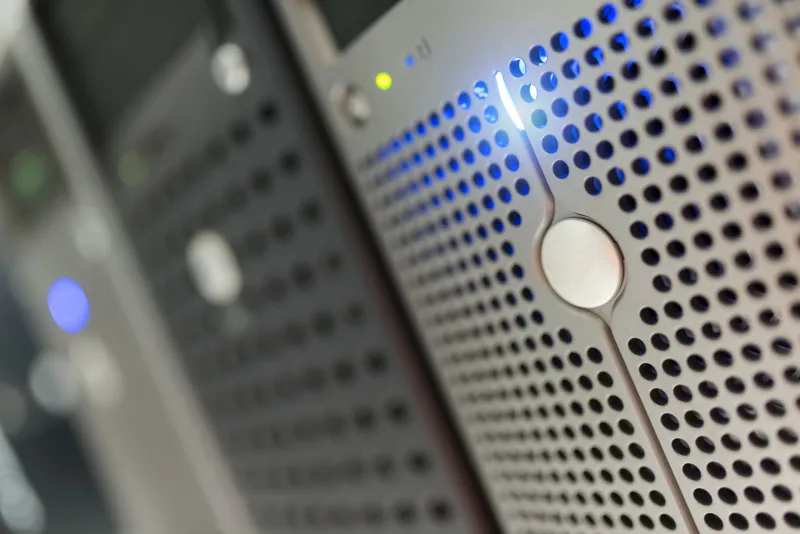
There's a specific kind of frustration that lives inside every creative studio working in visual media. It's not a creative block — the idea is already there, fully formed, vivid. The problem is that the machine won't be done with it until 3 a.m., and the client presentation is at 9.
Render queues have become one of the least-discussed bottlenecks in media and entertainment production. Everyone talks about creative vision, client alignment, and budget crunches. Fewer people talk about what happens when the infrastructure itself becomes the ceiling — when the gap between what an artist can imagine and what the hardware can process in time starts shaping creative decisions in ways nobody intended.
The Invisible Gatekeeper
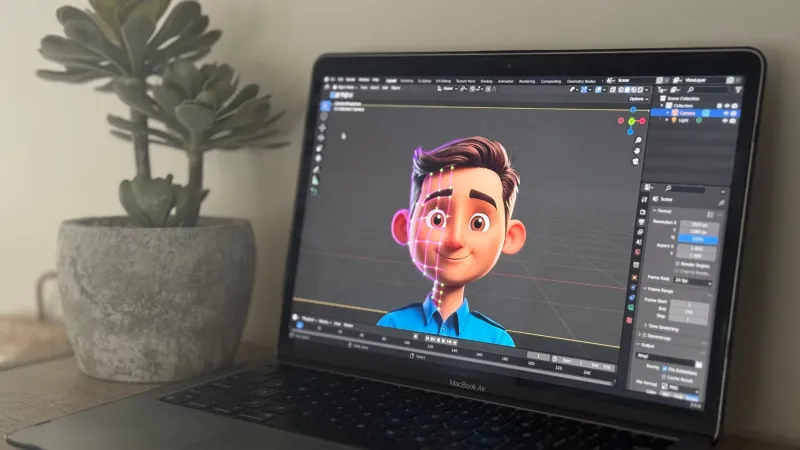
Here's what actually happens in a lot of mid-size studios: a director or production designer pitches something genuinely ambitious — a complex lighting scenario, a fully textured environment with volumetric fog, a sequence with layered particle effects. The team loves it. Then someone opens the render estimator, does the math, and the number that comes back quietly kills the idea before it ever gets a fair shot.
It's not always a hard no. Sometimes it's a softer kind of death — the idea gets simplified, the complexity gets dialed back, the fog gets replaced with a filter. The final product still looks good, but it's not the thing anyone actually wanted to make. The render farm didn't veto the project outright. It just quietly negotiated the ambition down.
This is what makes computational constraints so insidious compared to other production challenges. Budget problems are visible. Scheduling conflicts get discussed in meetings. But the render queue does its damage in silence, one compromised decision at a time.
The Studios That Figured Out a Different Way
Some studios have stopped treating render time as a problem to solve and started treating it as a design parameter — something to work with rather than fight against.
One approach that's gaining traction is what some teams call constraint-forward concepting. Instead of building out a full creative vision and then stress-testing it against render capacity, the technical limits get introduced at the very start of the concepting phase. Artists know going in that they're working within a specific computational budget. The creative challenge becomes: how do we make something extraordinary inside these boundaries?
It sounds limiting. In practice, it often produces more inventive work. When you can't brute-force your way to a result with processing power, you have to be smarter about where the visual weight actually lives. You start asking better questions — does this scene actually need volumetric lighting everywhere, or just in the one spot the camera lingers?
Prioritizing the Frame, Not the Whole Scene
Another strategy that production designers and CG supervisors are leaning into is something closer to what traditional cinematographers have always done: designing for the lens, not the room.
A lot of render time gets burned on elements the camera never actually sees at full resolution. Distant background geometry, off-screen light sources, reflections in surfaces that are barely in frame — these things can eat processing time without contributing meaningfully to what the audience experiences. Studios that build their scenes with explicit camera paths in mind from day one can dramatically reduce unnecessary computation.
This isn't a new idea in theory. But in practice, the pipeline often doesn't enforce it. Artists build complete environments out of habit, or because the brief calls for a "fully realized world," and then the render farm has to process all of it whether the camera visits those corners or not. Tightening the relationship between what gets built and what actually gets seen is one of the cleaner ways to claw back render capacity without sacrificing visual quality.
Cloud Rendering and the Cost Conversation Nobody Wants to Have
Cloud-based render farms — services like AWS Thinkbox, Google Cloud's rendering tools, or dedicated platforms like Conductor and Zync — have made it technically possible to scale up processing power on demand. The pitch is compelling: no more waiting in queue, just spin up more nodes.
But the cost math is complicated, and a lot of studios are still figuring out when it makes sense. Cloud rendering can be genuinely cost-effective for large studios with predictable workloads and the infrastructure to manage it. For smaller shops, the per-frame costs can spiral fast, especially on projects where the scope keeps shifting.
What the cloud rendering conversation has done, usefully, is force studios to start quantifying what render time actually costs them — not just in processing fees, but in delayed decisions, missed revisions, and the creative toll of working under time pressure. When you can put a dollar figure on the bottleneck, it becomes easier to have honest conversations about whether the current infrastructure setup is actually serving the work.
Designing With the Machine
The studios that seem to handle this best aren't the ones with the most processing power. They're the ones that have built genuine fluency between their creative teams and their technical teams — where a production designer and a CG lead are talking early and often about what's feasible, what's worth pushing for, and what's better solved with a clever workaround than raw compute.
That kind of fluency doesn't happen automatically. It requires a culture where technical constraints aren't treated as embarrassing limitations to hide from the creative conversation, but as real inputs that shape what gets made. It means building pipelines where render estimates are surfaced early, not revealed as bad news at the end of a concept phase.
It also means giving artists permission to design around constraints without feeling like they've failed. Some of the most visually distinctive work in media and entertainment has come out of studios that didn't have unlimited resources — where the constraint itself became part of the aesthetic signature.
The Queue Is Not the Enemy
Render time is going to remain a reality of production for the foreseeable future. Even as hardware gets faster and cloud options get more accessible, creative ambition tends to scale right alongside the available capacity. The ceiling rises, and the ideas get bigger to meet it.
The studios that thrive aren't the ones waiting for the infrastructure to finally catch up with their imagination. They're the ones that have learned to make imagination and infrastructure work in the same direction — treating the queue not as a gatekeeper, but as honest feedback about where the real work needs to happen.