The Broke Studio's Advantage: What Happens When You Can't Afford the Obvious Answer
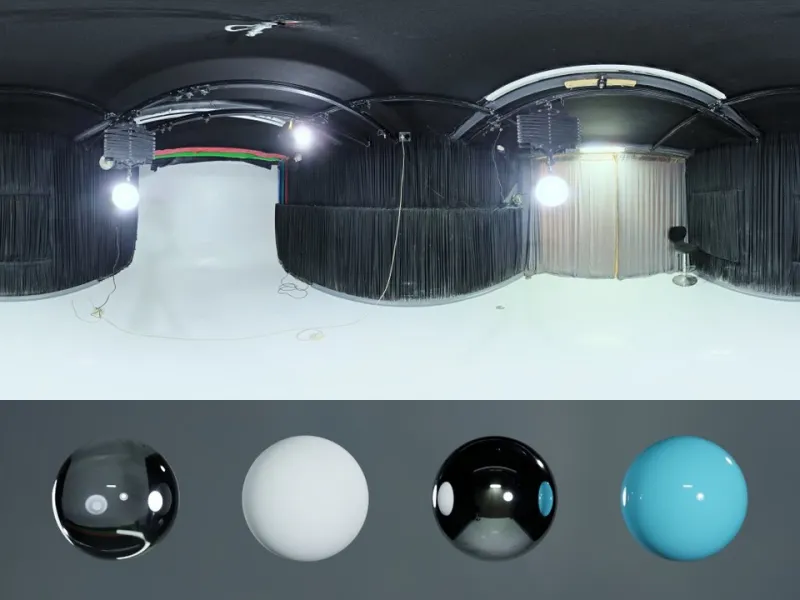
Photo: Greg Zaal, CC0, via Wikimedia Commons
There's a version of every creative project that money can solve. Need a sprawling period set? Build it. Need a photorealistic digital environment? Render it at full fidelity. Need a custom score? Hire the composer. The well-funded path through a creative problem is usually obvious, and obvious is usually fine.
Fine is the enemy of memorable.
Some of the most visually distinctive work in recent American film and television didn't come from the biggest budgets. It came from productions that couldn't afford the straightforward solution and had to invent something else—something that, in retrospect, turned out to be more interesting than what the money would have bought.
This isn't an accident, and it's not just a feel-good story about scrappy underdogs. There's a real mechanism here, and understanding it changes how you think about resource constraints in creative work.
What Abundance Actually Does to Creative Thinking
When you have the budget to do something the conventional way, you usually do it the conventional way. Not because you're lazy or unambitious—because it's rational. The proven approach is lower risk, easier to communicate to clients, and simpler to execute. The incentive to invent something new only kicks in when the proven approach is off the table.
This is why constraint is generative. It doesn't just force you to work harder—it forces you to think differently. The question stops being 'how do we do this?' and starts being 'what could this actually be?'
Psychologists call this 'creative constraint theory,' and there's a substantial body of research supporting it. Constraints reduce the option space, which sounds like it should reduce creative output, but what it actually does is reduce the cognitive overhead of navigating too many choices. Fewer options, more focus, better solutions.
The Practical Alchemy of 'We Can't Afford That'
In production design specifically, budget constraints have generated some of the most enduring visual innovations in the medium.
Limited set budgets have historically pushed designers toward selective detail—the practice of making a few elements hyper-specific and leaving others deliberately spare, directing the audience's eye rather than trying to fill every corner of the frame. The result is often more cinematically effective than a fully dressed, fully realized set, because it's designed for the camera rather than for the room.
Limited location access pushes directors toward interesting angles, creative framing, and the kind of resourceful staging that makes a three-block stretch of a mid-size city look like somewhere genuinely specific and strange. The constraint forces a visual intelligence that a bigger location budget might have bypassed entirely.
Limited VFX budgets push productions toward practical effects—in-camera solutions, forced perspective, physical builds—that have a texture and weight that digital compositing often can't match. Some of the most visually iconic sequences in contemporary independent film exist specifically because the production couldn't afford to do them any other way.
Reframing the Conversation With Clients
For studios working with clients in media and entertainment, one of the most valuable services you can offer is reframing what a budget constraint means before it becomes a source of anxiety.
The default client response to 'we can't afford that' is disappointment or panic. The alternative framing—'that constraint is going to make us find something better'—requires trust, and it requires the studio to have actually delivered on that promise before. But when you've built that track record, it changes the whole dynamic of the creative conversation.
Instead of a budget being a ceiling that limits what's possible, it becomes a parameter that shapes what's interesting. The client who comes in with a modest production budget and an openness to creative problem-solving is often the client whose project turns out to be the most distinctive thing in your portfolio.
Case in Point: Doing More With a Smaller Canvas
Think about what's happened in the podcast and audio drama space over the last decade. Productions with essentially no visual budget have produced storytelling experiences that major studios with full production capabilities haven't matched—not despite the constraint, but because of it. The absence of a visual option forced a level of sonic and narrative craft that a bigger budget might have papered over.
Or look at the explosion of single-location films that followed the pandemic production restrictions. Filmmakers who would have otherwise spread their stories across multiple settings were forced into confined spaces—and a surprising number of them discovered that the confinement was dramatically interesting in ways their original scripts weren't.
Constraint doesn't just force efficiency. It forces a kind of creative honesty. You can't throw money at a conceptual problem. You have to actually solve it.
Building a Studio Culture That Treats Limits as Assets
For this mindset to work, it has to be genuine. There's a difference between a studio that has genuinely internalized the creative value of constraint and a studio that's just trying to make clients feel better about a limited budget. Clients can tell the difference, and so can the work.
The studios that thrive under constraint tend to share a few cultural traits. They maintain a practice of creative problem-solving that doesn't wait for constraints to arrive—they apply constraint thinking to projects regardless of budget, because the habit of asking 'what's the most interesting version of this?' is more reliable than the habit of asking 'what's the most expensive version of this?'
They also invest in research. Knowing what's been done before—not to copy it, but to understand the full landscape of what's possible—means you can identify the genuinely unexplored territory faster when you're working with limits. The studio with a deep visual vocabulary finds the interesting solution quicker than the studio that only knows the expensive one.
The Paradox of the Big Budget
Here's the uncomfortable truth that most well-funded productions don't want to sit with: a large budget doesn't just buy you options. It buys you the option to avoid the creative discomfort that produces great work.
The studio with unlimited resources can always solve a problem by spending more. The studio without those resources has to solve it by thinking harder. And thinking harder, more often than not, produces something worth remembering.
Scarcity isn't a bug in the creative process. For the studios willing to treat it honestly, it's one of the most reliable features they have.