Fast, Cheap, and Out of Control: How Real-Time Rendering Is Rewriting the Rules of Creative Risk
There's a moment every creative director knows. You're staring at a render that took 14 hours to produce, and it's almost right. The lighting is off. The texture reads weird on screen. But the deadline is breathing down your neck, so you ship it anyway — and you spend the next six months thinking about what it could have been.
That moment is becoming rarer. And depending on who you ask, that's either the best thing to happen to visual storytelling in a decade, or the beginning of a very expensive procrastination epidemic.
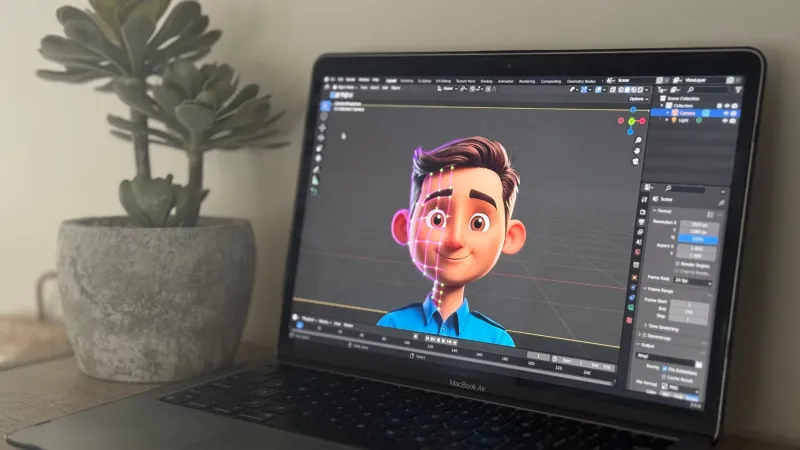
Real-time rendering engines like Unreal Engine and tools powered by AI-assisted visualization have quietly dismantled the old calculus of creative risk. What used to cost a studio a full render farm, three days, and a junior artist's sanity can now be approximated in minutes. Ideas that once required serious capital commitment before anyone could see them? You can sketch those out, light them, populate them, and kill them before lunch.
The question nobody's quite figured out yet is whether that's making the work bolder — or just making it endless.
The Old Gatekeeping Was Expensive, But It Made You Commit
Here's the uncomfortable truth that a lot of people in production design are quietly sitting with: the old constraints had a function. When a photoreal render cost $8,000 and three weeks of pipeline time, you thought hard before committing to it. You argued in the room. You killed bad ideas early because you had to.
That friction wasn't purely wasteful. It forced creative teams to do the intellectual work upfront — to stress-test concepts before they became expensive geometry. The cost was the filter.
Now that the filter is mostly gone, studios are discovering something about their own decision-making processes that isn't entirely flattering: a lot of teams didn't have a creative process. They had a budget-imposed deadline. Remove the budget pressure and you're left with a loop. Iterate, revise, iterate again, lose the thread, start over.
One creative director at a mid-sized LA production studio — who asked not to be named because they're still figuring out their own workflow — put it bluntly: "We rendered forty-seven versions of the same environment last year. Forty-seven. We used version twelve. I'm not sure the other thirty-five taught us anything we couldn't have figured out on paper."
The Democratization Argument Is Real, Though
Before this turns into a eulogy for render farm suffering, it's worth being honest about what these tools have actually unlocked — especially for smaller studios and independent filmmakers who never had access to the old infrastructure in the first place.
Real-time visualization has become a genuine equalizer. Indie directors who used to walk into pitch meetings with hand-drawn storyboards and a prayer are now showing up with fully lit, camera-blocked previsualization sequences that communicate a vision with real specificity. That changes the conversation. It changes what gets greenlit and who gets the shot to make something ambitious.
VFX supervisors working on mid-budget projects describe using real-time tools to have creative conversations with directors that simply weren't possible before — not because the technology didn't exist, but because the cost of exploring an idea made exploration itself a luxury. Now you can walk a director through three completely different interpretations of a scene in a single afternoon and actually decide something together, in the room, before the production designer has committed a single physical resource.
That's not nothing. That's actually kind of remarkable.
Where AI Changes the Game (And Where It Gets Weird)
The AI layer on top of real-time rendering is where things get genuinely complicated. AI-assisted visualization tools can now generate environment concepts, lighting scenarios, and texture variations faster than any human pipeline — which is useful until it isn't.
The speed at which AI tools generate options can actually overwhelm creative judgment rather than support it. When you can produce 200 variations of a set design in an hour, the bottleneck isn't production anymore — it's decision-making. And decision-making is a cognitive and creative skill that doesn't automatically scale with output volume.
Some studios are building explicit decision gates into their workflows to compensate. Before a project enters any kind of AI-assisted visualization phase, the creative team has to produce a written brief — not a mood board, not a reference dump, an actual written articulation of what they're trying to say visually. Then the renders serve the brief rather than replacing the thinking.
Other studios are doing the opposite: using AI generation as a divergence tool early in the process, generating a wide field of options specifically to surface ideas nobody would have pitched in a room, then applying human editorial judgment to cull aggressively. The AI as a provocation engine rather than a production tool.
Both approaches seem to work. What doesn't work is using the speed of these tools as a substitute for having a point of view.
The Iteration Trap
There's a specific failure mode that experienced creative directors are starting to name out loud: the iteration trap. It works like this. Real-time rendering makes revision so cheap that every stakeholder — from the director to the executive producer to the client — feels entitled to weigh in at every stage. Nobody has to commit to a direction because another version is always fifteen minutes away.
The result is work that gets revised to death. Not because anyone is being difficult, but because the tooling has accidentally eliminated the concept of a decision point. When nothing is precious and everything is provisional, the work can lose its spine.
The studios navigating this best are the ones treating iteration speed as a front-loaded tool rather than a permanent mode. Use the speed early to explore aggressively. Then call it. Lock the direction. Use the remaining production time to execute with intention rather than to keep second-guessing.
Easy to say. Genuinely hard to do when the render button is right there.
What This Actually Means for Creative Studios
The studios that are going to get the most out of real-time rendering and AI visualization aren't the ones with the fastest pipelines. They're the ones with the strongest creative culture — the ones where someone in the room has the authority and the confidence to say this is the direction and mean it.
The tools are extraordinary. The speed is real. The democratization of bold visual ideas is happening, and it's worth being genuinely excited about.
But the tools don't have taste. They don't know when something is done. They don't get tired of iterating. That part is still entirely on the humans in the room — and right now, a lot of those humans are still figuring out how to use infinite possibility without drowning in it.