Atlanta Doesn't Want to Be LA Anymore: The Quiet Rise of Regional Design Identity
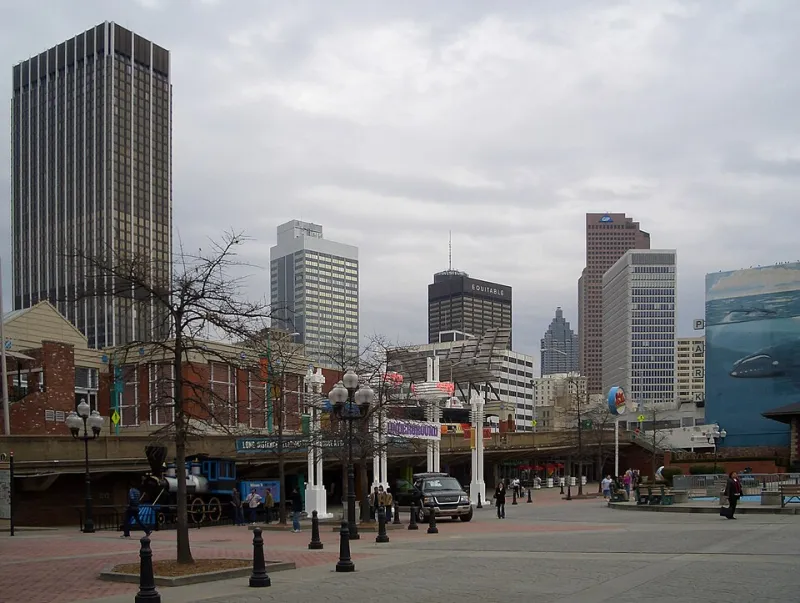
Photo: Diego Delso, CC BY-SA 3.0, via Wikimedia Commons
There was a formula, and for a long time it worked: take the story, shoot it wherever the tax credit is fattest, and dress every location to look like Everywhere, USA. Albuquerque stood in for the desert. Atlanta stood in for everything. Pittsburgh stood in for Pittsburgh pretending to be somewhere else.
That formula is falling apart, and honestly, good riddance.
From Backdrop to Point of View
Spend time in the production design communities in Atlanta or Albuquerque or Pittsburgh now and you'll notice something that wasn't there a decade ago: a point of view. These cities spent years absorbing an enormous volume of work—Georgia alone has hosted everything from Marvel tentpoles to prestige dramas—and somewhere in that volume, a generation of local designers, set builders, scenic artists, and fabricators came up. Not as transplants. As lifers.
And their work looks different. Southern Gothic maximalism in Atlanta set design isn't an aesthetic imported from a lookbook; it's drawn from the actual textures of the place—the faded neon of Peachtree corridors, the kudzu-tangled edges of the perimeter, church fans and trap houses and mid-century strip malls that carry more character per square foot than any backlot. New Mexico's design scene leans into light and adobe and a kind of sun-bleached brutalism that no LA soundstage can fake, because it isn't trying to.
The infrastructure followed the talent. Atlanta has fabrication shops and prop houses that can build at scale without a shipment from the West Coast. Pittsburgh's renaissance as a filming hub has fed a craft community with deep rust-belt practical skills—metalwork, industrial salvage, the kind of hands-on making that coastal pipelines increasingly outsource.
The Case for Putting Down Roots
Here's the opinion part: the coast-to-coast creative monoculture is over, and studios still pretending otherwise are leaving value on the table.
Choosing where to root a studio used to be a spreadsheet decision—rebates, crew availability, weather. Those factors still matter. But the studios winning regional identity are treating location as a design asset, not a tax line. A studio in Atlanta that leans into its context—hiring locally, sourcing materials locally, letting the region's visual language inform its work—develops a signature that's genuinely hard to copy. You can't fake patina. You can't overnight-ship a sense of place.
There's a business logic under the romance, too. Regional identity is a differentiator in a market where every studio's reel starts looking alike. A client who wants a story that feels rooted has fewer options than you'd think. And the talent economics are real: designers who can own a house and walk to work in Pittsburgh are less likely to burn out and bolt to the coasts than their counterparts paying half a salary on a Los Angeles one-bedroom.
What Gets Lost, and What Doesn't
The honest counterpoint: proximity still matters for some work. Certain clients, certain networks, certain greenlight ecosystems still run through Los Angeles and New York, and a studio completely off the wire risks missing the hallway conversations where deals germinate. Hybrid setups—coastal presence for business development, regional roots for craft and production—are becoming the norm for a reason.
But the direction of travel is clear. The next great American production design aesthetic probably isn't coming out of a Burbank stage. It's coming out of a converted warehouse in the Old Fourth Ward, a salvage yard outside Albuquerque, a Pittsburgh machine shop where somebody's grandfather made steel and somebody's granddaughter is making worlds.
The backdrop has learned to speak. Studios that listen will have something the coasts can't buy.