Build It to Break: How Smart Production Designers Stress-Test Their Boldest Ideas Before the Camera Rolls
There's a moment every production designer knows well. You've spent weeks developing a concept that feels genuinely new — a structural environment that bends visual logic, a material palette that nobody's tried at this scale, a practical effect that lives right at the edge of what's physically possible. The mood board is stunning. The client is excited. And then somebody on the production team quietly asks: but will it actually work?
That question used to feel like a buzzkill. Now, the smartest designers in the business treat it as the starting gun.
Building failure into your design process isn't about lowering ambition. It's about protecting it.
Why Ambitious Concepts Are Structurally Vulnerable
Here's the uncomfortable truth about bold visual ideas: the more original they are, the fewer reference points exist for stress-testing them. When you're working in familiar territory — a period kitchen, a corporate office, a standard apartment set — decades of production experience tell you roughly where the problems will show up. You've got institutional memory to lean on.
But when you're designing something genuinely unprecedented? You're flying without instruments.
That's where production designers who understand what we'd call the physics of failure pull ahead. They don't just design the concept — they design the concept's breaking points. They ask, before a single piece of lumber gets cut: where is this most likely to fall apart, and what happens to the project if it does?
The answer to that second question shapes everything. Some failures are recoverable. Others are catastrophic. Knowing the difference before you're on set at 11 PM trying to figure out why a key structural element won't hold is the entire game.
The Controlled Demolition Mindset
Think about how civil engineers approach bridge design. They don't just calculate the load a structure needs to carry — they calculate the load at which it will fail, and then they engineer the failure to be survivable. The bridge doesn't just hold; it holds in a predictable, manageable way even when pushed past its limits.
Production design can borrow this framework directly.
When a design concept is still in its early development phase, the most valuable exercise a team can run is what some designers call a demolition review — a structured session where the explicit goal is to identify every plausible way the design could fail in production. Not to kill the concept, but to map its vulnerabilities before they become crises.
This means asking hard questions out loud:
- What happens to this material under sustained stage lighting at close range?
- How does this structural element behave when a camera operator needs to move through it repeatedly?
- If the practical lighting rig shifts by six inches, does the whole visual logic of the space collapse?
- What's the fallback if the fabrication vendor can't deliver the custom component on schedule?
None of these questions require pessimism. They require rigor. And answering them early almost always leads to a stronger, more confident final design — not a compromised one.
Over-Engineering as a Creative Strategy
One counterintuitive lesson from designers who've worked at the highest levels of film and television production: intentional over-engineering is often the most efficient path to a bold final result.
The instinct is to build exactly what you need. Budget pressure reinforces this. But experienced production designers know that building more structural redundancy than you think you need — especially on practical, load-bearing, or mechanically complex elements — creates something valuable: creative freedom on set.
When a set is built to its absolute minimum viable spec, every unexpected demand from a director or DP becomes a potential crisis. Can we hang a camera here? Can we remove this wall section? Can we flood this floor? Each of those questions, on an under-engineered set, is a negotiation with physics that you might lose.
Over-engineer the structure, and those questions become opportunities instead of emergencies. The set can absorb creative pivots because it was built with margin. That margin costs something up front. It pays back in spades during production.
Material Limitations Are Information, Not Obstacles
Some of the most visually distinctive design solutions in production history came directly from constraints that initially looked like failures. A material that couldn't be finished the way the original design called for. A structural approach that needed to be abandoned and rebuilt using a different method. A color treatment that reacted unexpectedly under practical lights and produced something more interesting than what was originally planned.
The designers who found gold in those moments weren't just lucky. They were paying attention in a particular way — treating material limitations as information rather than obstacles. They were asking: what is this material actually telling me about what it wants to do?
This is a subtle but significant shift in perspective. When you approach a fabrication problem as a negotiation with the material rather than a battle against it, you start finding solutions that are inherently more stable. The design works with the physical reality of the set, not against it. And designs that work with physical reality tend to survive contact with a real production — with real lighting, real camera movement, real crew traffic — far better than designs that were forced into existence.
Building a Failure Framework Before the First Draft
If you're a production designer, art director, or creative director looking to bring this approach into your practice, here's a practical starting point.
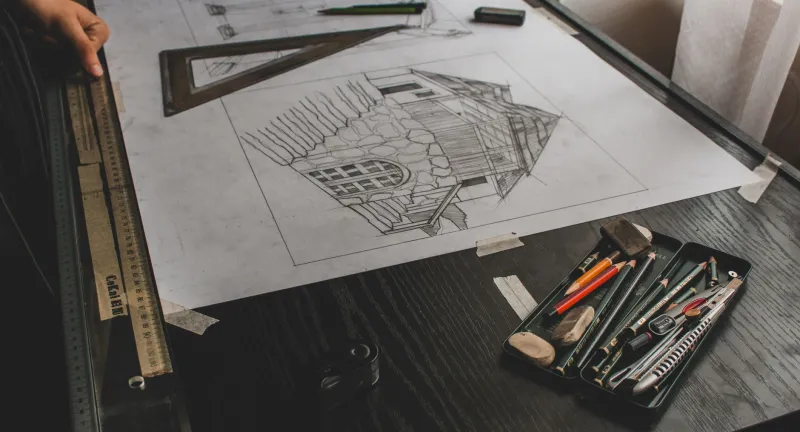
Before you develop any concept past the initial sketch phase, create what amounts to a failure map alongside your design documentation. It doesn't need to be elaborate. It just needs to honestly answer three questions for every major design element:
1. What's the most likely failure mode for this element under real production conditions? Be specific. "It might not look right" is not a failure mode. "The adhesive bond between these two materials will degrade under sustained heat from a 2K fresnel at four feet" is a failure mode.
2. How catastrophic is that failure if it happens on set? Rate it honestly. Some failures are annoying. Some stop production. Some compromise the entire visual concept of the project.
3. What's the designed response if that failure occurs? Have a plan before you need one. Not a vague backup idea — an actual, resourced contingency that your team knows about and can execute.
This framework won't eliminate surprises. Nothing does. But it changes the nature of the surprises you encounter. Instead of discovering that a critical design element doesn't work during a live shoot day, you discover it during a controlled test. Instead of improvising a solution under pressure, you execute a plan you already made.
The Boldest Designs Are the Most Prepared Ones
There's a persistent myth in creative work that preparation and ambition are in tension — that planning too carefully somehow sands the edges off a vision, makes it safer, makes it smaller. In production design, the opposite is almost always true.
The most visually audacious work that's made it to screen got there because someone on the design team thought carefully, early, and honestly about where it could break. They built the concept to survive. And when it inevitably got pushed, pulled, and improvised on by a real production with real constraints, it held.
That's not a happy accident. That's a design philosophy.
At Studio Argila, we'd call it the only way to build something worth looking at.