Facades, Fake Streets, and the Warehouse in Queens: Practical Set Magic That Fooled Everyone
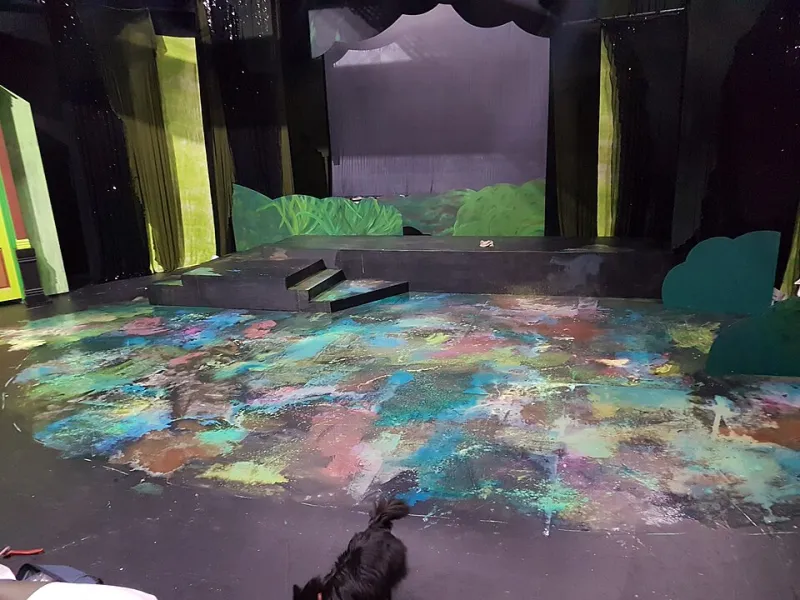
Photo: Lisa Maule, CC BY-SA 4.0, via Wikimedia Commons
Every production designer has a favorite lie. Not a story—a lie. A moment where the audience absolutely believed they were looking at a real place, and the designer gets to smile knowing it was plywood, paint, and nerve.
We wanted to celebrate a few of the great ones, because each illusion carries a lesson that applies whether you're building for a theater screen or a phone screen.
The Two-Thirds Street That Reads Like a Whole One
Classic Hollywood figured out early that nobody needs the whole building—just the part the camera sees. Backlot westerns and studio-era New York streets were built at two-thirds scale, sometimes with the upper floors literally painted flat or propped up with false fronts. The trick works because human eyes don't measure architecture; they measure relationships. Get the door height, the storefront, and the horizon line right, and a ten-foot façade reads as a three-story brownstone.
The lesson: scale is a suggestion. Design for the relationship between elements, not their true dimensions.
The Entire City Inside One Warehouse
There's a special breed of production where a 'location shoot' happens forty minutes from the stage. Entire interiors—the kind that would require permits, closures, and weather contingencies in a real city—get constructed inside a single warehouse in Queens or a converted mall in the Midwest. The camera moves through rooms that share no actual walls, connected only by careful continuity of sightlines and lighting temperature.
The lesson: a location is an experience, not an address. If the audience walks the space without a cut, the geography is real to them, even if the floor plan is impossible.
The Ceiling That Was Never There
Interiors on soundstages often have no ceilings at all—or ceilings that lift away on rigging like the lid of a shoebox. Lighting rigs hang where the roof should be, and the 'ceiling' in the frame is either a painted translight or nothing at all, with the top of frame cropped just so. Viewers never question it because rooms on film are lit like stages, and our brains accept the glow without asking where the roof went.
The lesson: negative space is a set piece. What you leave out—and where you crop—shapes believability as much as what you build.
The Forced-Perspective Corridor
Borrowed from theme parks and stagecraft centuries old: corridors built with progressively smaller doorframes, shrunken furniture, and a child actor (or a full-scale adult at the near end) creating a giant's hallway out of thirty feet of stage. Done right, it's seamless. Done wrong, it's a blooper reel. The difference is usually a single point of view—the illusion holds only from one lens height, one mark, one camera position.
The lesson: illusions are commitments. Know exactly where the camera will be before you commit to a trick that only works from there.
The Weather That Came From a Hose
Rain on a backlot is a crew with garden hoses on scaffolding, plus a layer of glycerin on the pavement so puddles catch light like glass. Wet-down streets photograph richer, deeper, more 'real' than dry ones—an entire mood manufactured with plumbing.
The lesson: atmosphere is cheap and powerful. Before reaching for a digital storm, ask what a hose and a lighting angle can do for free.
Why This Still Matters
Every one of these tricks predates rendering farms, and every one still gets used today—because they're fast, they're tactile, and actors can touch them. The modern production designer's toolkit isn't analog versus digital. It's knowing which lie to tell, and having the craft to tell it convincingly. The best compliment a designer can get is still the oldest one: 'Wait, that wasn't a real place?'