When the Camera and the Set Finally Get on the Same Page
There's a version of filmmaking where the production designer builds a world and the cinematographer figures out how to shoot it. That version has existed for most of Hollywood's history, and it's produced some genuinely beautiful work. It's also produced a whole lot of unnecessary friction, last-minute compromises, and sets that look incredible in person but feel weirdly flat once the lens gets involved.
The good news is that a growing number of studios—both the big players and the scrappier indie outfits—are finally treating that friction as a solvable problem rather than just the cost of doing business.
Two Departments, One Visual Language
Here's the honest tension: production designers and cinematographers both have strong opinions about light. That's not a bug in the system—it's actually what makes both roles so valuable. But when those opinions develop in separate rooms, on separate timelines, with separate reference materials, you end up with a set that was designed around warm practical lighting getting flooded with cool LEDs because that's what the DP decided suited the mood of the scene.
Neither person is wrong, exactly. They're just not talking.
What studios are starting to do—and what we've seen work really well in the projects we follow closely here at Studio Argila—is build early visual alignment sessions directly into the pre-production calendar. Not a single mood board handoff. Not a brief Zoom call. Actual working sessions where both disciplines sit down together and hash out what the visual world of a project is supposed to feel like before anyone picks up a tool.
It sounds simple. It kind of is. And it changes everything.
Shared Mockups Are Doing the Heavy Lifting
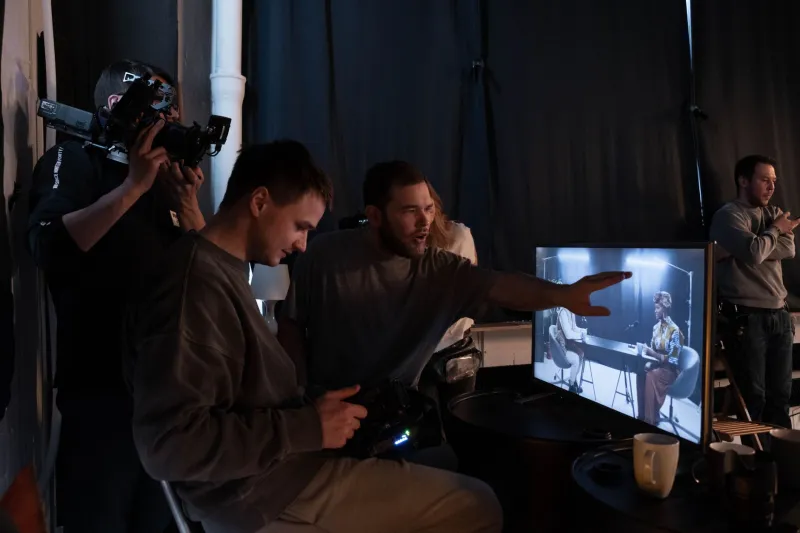
One of the most practical techniques gaining traction is the collaborative lighting mockup—basically a rough physical or digital build of a key set, constructed specifically so both the designer and the DP can test ideas together in real time.
Think of it less like a finished prototype and more like a sandbox. The production designer brings their material choices, their color palette, their sense of texture and depth. The cinematographer brings their lens preferences, their instincts about shadow and highlight, their ideas about how movement through the space should feel. The mockup becomes a shared object that neither person owns—and that's kind of the point.
When you're both staring at the same thing, the conversation shifts. Instead of defending separate visions, you start building one together. The designer might realize a wall color they loved in isolation reads completely differently under the DP's preferred lighting setup. The DP might discover that a practical fixture the designer spec'd actually does something interesting that they want to lean into rather than override.
These aren't hypotheticals. Studios that have adopted this approach consistently report fewer on-set surprises and faster shooting days—which, in production, translates directly to budget.
Color Testing That Goes Beyond Swatches
Another area where the collaboration is getting more sophisticated is color. Historically, a production designer might develop a full color script—a sequence of hues that tracks emotional shifts across the story—and hand it off as a reference document. The cinematographer would note it, maybe adapt to it, maybe not.
What's changing is the how of that handoff. Instead of static swatches or PDF references, some studios are doing live color tests where set materials and camera settings are evaluated together under controlled conditions. They're essentially asking: how does this specific shade of ochre behave under this specific color temperature, with this specific diffusion? And what does that combination do to the skin tones of the actors who'll inhabit the space?
That last part matters more than people talk about. A set can be designed with extraordinary intentionality and still undermine the performances happening inside it if the camera and the design aren't calibrated to work together around the human face.
Breaking Down the Silo Culture
The deeper issue here is structural. Film and TV production has historically been organized around departments that protect their own turf. There are good reasons for that—clear accountability, streamlined decision-making, specialists who can go deep in their lane. But the silo culture that comes with it creates a particular kind of waste: the waste of potential that never gets realized because two brilliant people never had a real conversation.
The studios doing this well aren't just scheduling more meetings. They're rethinking the hierarchy of who gets input at what stage. Bringing a DP into conversations about set construction—not just set decoration—means they can flag potential issues before concrete gets poured (sometimes literally). Bringing a production designer into early camera tests means the visual language of the project can be stress-tested before it's locked in.
This is the kind of thing that feels like overhead until you've seen what it prevents.
What This Means for Smaller Shops
If you're running a smaller creative studio or working on independent productions, the instinct might be to think this kind of collaboration is a luxury reserved for projects with bigger budgets and longer timelines. That instinct is understandable and also wrong.
Actually, smaller productions often have a structural advantage here: the teams are compact enough that the production designer and the DP might be sharing a work table anyway. The challenge isn't access—it's intentionality. It's making the collaboration deliberate rather than incidental, building it into the workflow rather than hoping it happens organically.
Even something as low-tech as a shared visual reference folder—not a mood board, but an active document that both disciplines contribute to and pull from throughout pre-production—can shift how a project comes together. The goal isn't a committee. It's a shared visual conscience.
The Audience Feels It Even When They Don't See It
Here's the thing about all of this: when it works, nobody notices. That's not a knock on the craft—it's the highest compliment. When a set and a camera are genuinely working in concert, the audience doesn't think "great production design" or "beautiful cinematography." They think "I believe this world." They lean in. They stay.
That seamless believability is what both disciplines are ultimately after. The invisible collaboration—the one that leaves no fingerprints—is the one worth chasing.
And it starts with two people in a room, looking at the same thing, and actually talking about what they see.